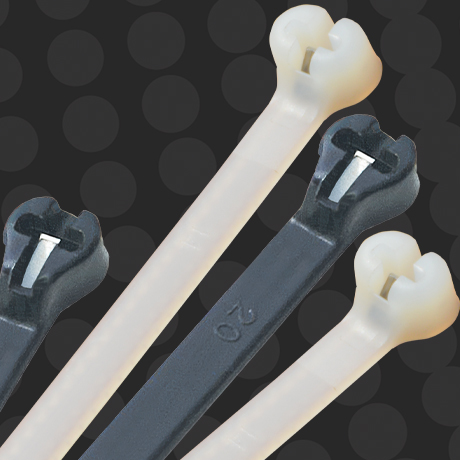
Stainless Steel Tooth Metal-Lock Nylon Cable Ties
Hayata features a full line of high tensile strength metal-lock nylon ties with a robust stainless steel tooth for more precise and long lasting tie-lock. These are also known in the industry as “Barb Ties.”
These Ties are essentially a higher-performance version of a conventional nylon zip tie. The key difference is in the locking head: instead of relying on a molded nylon pawl to engage the strap, they use a stainless steel locking tooth or barb. That small variance makes a significant difference in how securely and consistently the tie holds.
Product Features
- Smooth rounded-style head – rounded edges for easy handling and low-threading force required for faster installation and lower hand fatigue
- Stainless Steel locking tooth provides infinite adjustability through its entire bundle range
- Sure-Grip Strap Body – ribbed and raised for sure grip &designed to eliminate movement
- Curved Tie Tip for faster threading – makes it easier for the installer to pick up
- Low thread force reduces installer fatigue
- High tensile strength exceeds industry standards from 18 – 120 lbs. – the strongest around!™
- Wide variety of sizes – lengths from 4″ (100mm) up to 30.5″ (780mm)
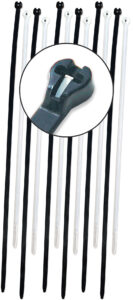
- Available in Natural or Black UV. Other colors available upon request.
Specifications
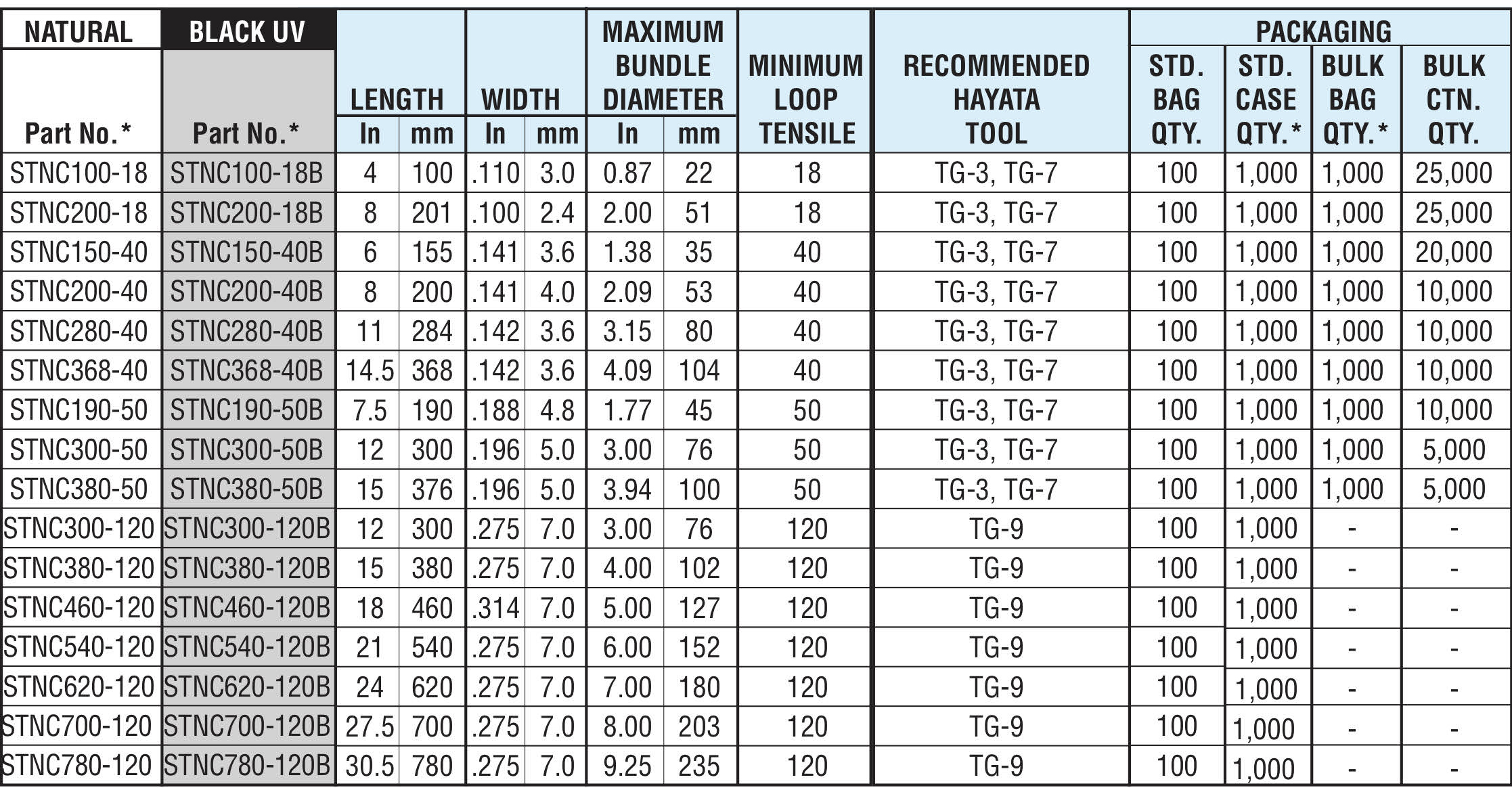
*To order Bulk (1,000/Bag): – NATURAL: add “M” at end of part number
(example: STNC100-18M) – BLACK UV: add “M” before B (example: STNC100-18MB)
How they work
When the nylon strap is pulled through the head, the stainless steel tooth bites into the strap and prevents it from backing out. Because the metal tooth can engage essentially anywhere along the strap, the tie isn’t limited to locking at molded tooth increments. We best describe it as “infinite adjustability” throughout the bundle range.
Metal-Lock vs. Ordinary Nylon Ties
| Feature | Standard Nylon Tie | Stainless-Tooth Metal-Lock Nylon Tie |
|---|---|---|
| Tie body | Nylon | Nylon |
| Locking mechanism | Molded nylon pawl | Stainless steel tooth |
| Locking positions | Determined by molded serrations | Essentially continuous |
| Resistance to slipping | Good | Better |
| Vibration applications | Good | Better suited |
| Installation effort | Low | Often very low |
| Electrical conductivity of body | Non-conductive | Non-conductive |
| Cost | Lowest | Higher |
| Severe heat/fire/corrosion | Limited | Limited |
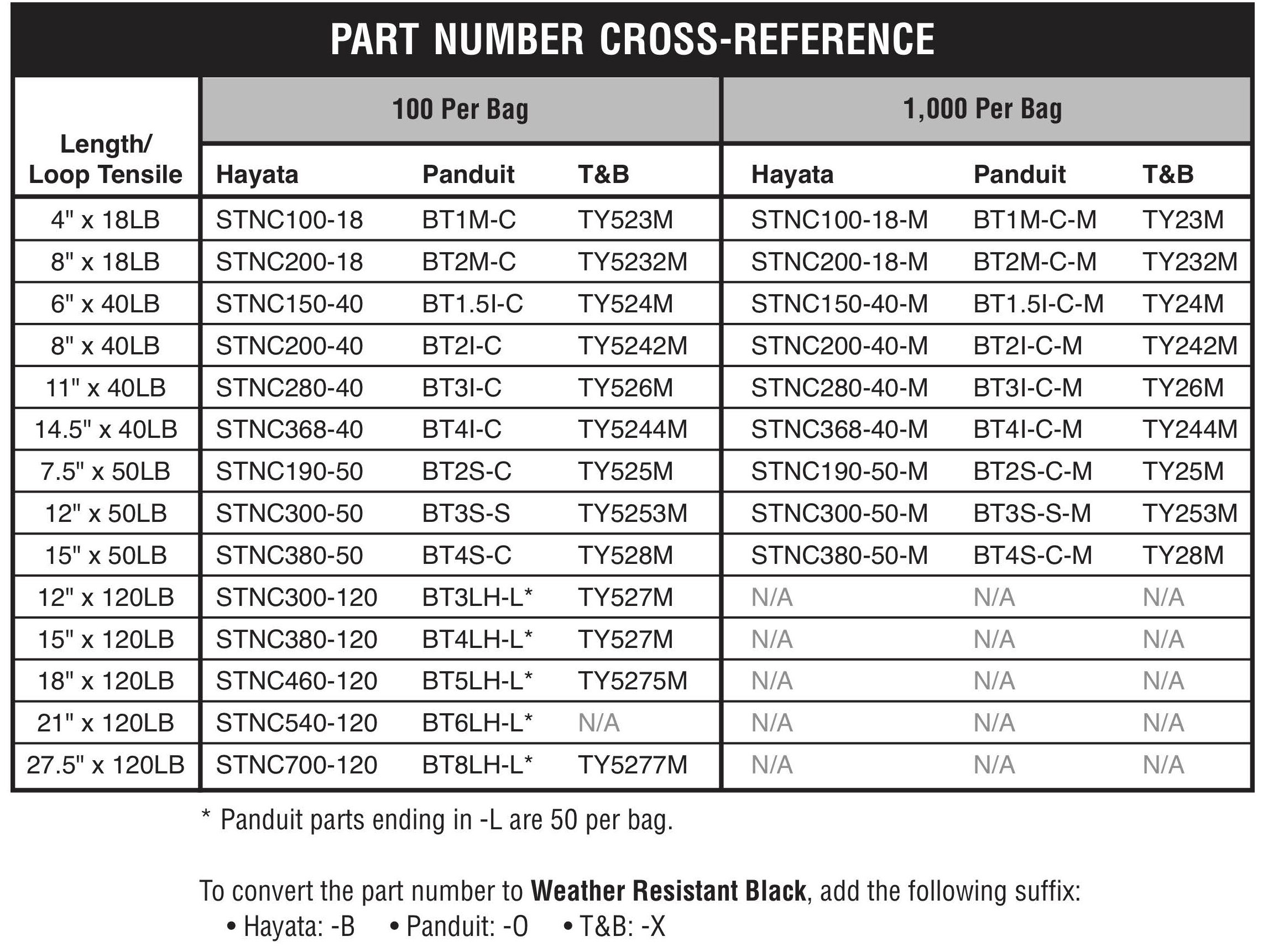
SS Tooth Nylon Cable Tie Tension Tools

If you are using Panduit or Thomas & Betts Nylon Tooth Ties, use this chart to find the Hayata part number you need.
FAQ
Q: What are the best uses for Stainless Steel Tooth Nylon Ties?
- Industrial equipment and machinery — control wiring, hoses, pneumatic tubing and harnesses exposed to vibration.
- Electrical installations — wire and cable bundling where a secure lock is important but an all-metal tie isn’t needed.
- Automotive and transportation — wiring harnesses and components, especially those subjected to vibration and temperature changes.
- Manufacturing and OEM applications — Well suited for repetitive assembly where consistent installation and lower threading force matter.
- Telecommunications and data cabling — cable organization and bundling where a clean, controlled and long-term secured installation is desired.
Q: What is the difference between a barb tie and a stainless steel tooth tie?
A: “Barb tie,” “metal-lock cable tie” and “stainless steel tooth nylon tie” are fundamentally the same product. There may be some small variables in the manufacturer’s design, but they all use a small metal barb/tooth/lock, typically stainless steel, inside the tie’s locking head to grip the nylon strap.
Q: What certification’s do Hayat’s SS tooth nylon ties have?
A: c UL us, RoHS and PAHs.
Interested in This Product?
Brochures & Downloads